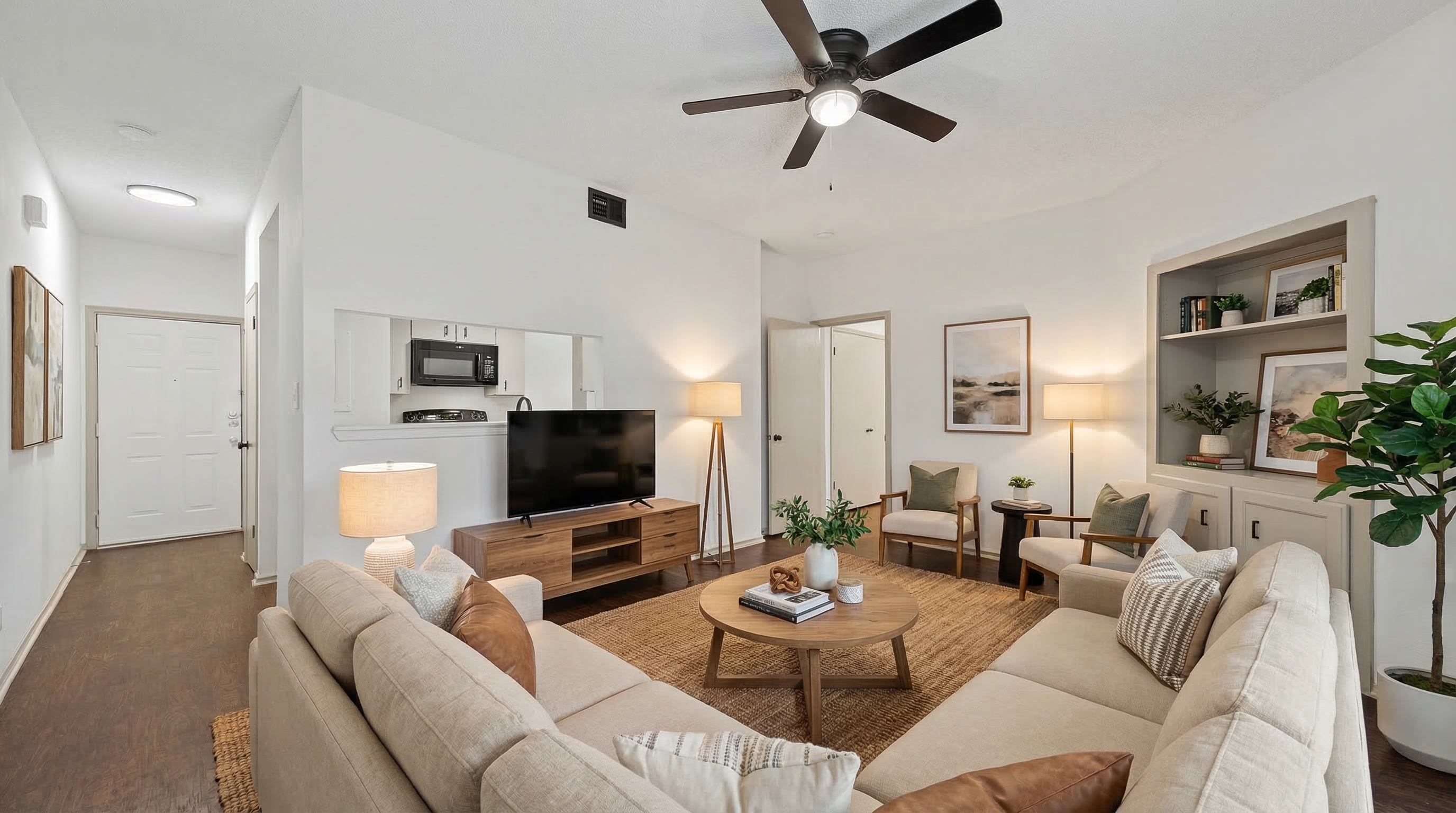
Moving to Waco, Texas: The Complete Relocation Guide for New Baylor Students

If you've committed to Baylor and you're staring down a Google Maps route from wherever home is to Waco, Texas — welcome to the planning phase. Moving to Waco, Texas as a new student is genuinely exciting, but it comes with a learning curve most orientation packets skip. This guide covers everything: what things actually cost, which neighborhoods make sense, how to handle the logistics of your move, and what life in Waco really looks like once you're settled.
What It Actually Costs to Live in Waco
The first thing you'll notice about moving to Waco is how affordable it is compared to most college towns. Waco's cost of living index sits at 78.9 against a national average of 100 — roughly 21% cheaper than the U.S. average. That gap shows up fast at the grocery store (7-8% below national average), the gas pump ($2.61/gallon), and especially in rent.
Average monthly rent across all of Waco runs $1,035-$1,356 depending on the source and property type. The Baylor neighborhood specifically skews higher — expect a median around $1,500/month for a single bedroom — because proximity to campus commands a premium. If you're budgeting for your first year, a realistic total monthly spend for a single student lands around $2,125/month covering rent, food, transportation, and incidentals.
A few cost realities worth knowing upfront:
- Housing: 19-22% cheaper than the national average (RentCafe 2026)
- Groceries: 7-8% below national average — your food budget will stretch further here
- Healthcare: Slightly above average (2-6% more expensive) — factor this in if you're weighing insurance options
- Utilities: Energy runs about $215/month; Waco summers are hot
One practical move: look for apartments that bundle costs. At 19Eleven Apartments (1911 S 8th Street), the flat $97/month fee covers internet, trash, pest control, and facilities — which simplifies budgeting and eliminates the "what does this place actually cost per month" math problem.
For a deeper look at what off-campus housing in the Baylor area runs by unit type, check out what to expect to pay for Baylor off-campus housing in 2026.
Choosing the Right Waco Neighborhood
Waco's geography is straightforward once you orient yourself around campus. Most students gravitate toward three zones:
The Baylor Area (South 8th Street Corridor) is the most student-dense neighborhood and has the second-highest Walk Score in all of Waco (55-70). If your priority is cutting out a car commute to class, this is where to focus. The South 8th Street corridor runs directly south of campus and puts you within walking distance of Baylor's main gates.
Downtown Waco has the highest Walk Score in the metro and a growing food and entertainment scene, but it's a 10-15 minute drive from most campus buildings. It's a great option if you have a car and want to be near restaurants, bars, and the Magnolia Market district without paying Baylor-area rent premiums.
Outlying suburbs (Woodway, Hewitt, China Spring) are typically cheaper but require a car for everything. If you're used to city living, the tradeoff probably isn't worth it your first year.
For most new Baylor students, especially those arriving from out of state, living within 0.5-1 mile of campus is the right call until you understand the city. 19Eleven sits at 1911 S 8th Street — a 10-minute walk to campus — with gated, controlled-access entry, which matters when you're evaluating safety in a neighborhood you don't know yet. Browse the 19Eleven floor plans to see current 1BR through 4BR options ranging from $1,035 to $1,800/month.
To understand what the immediate Baylor area offers beyond housing, the neighborhood page has a solid breakdown.
Getting to Waco: Moving Logistics
Waco sits almost exactly midway between Dallas (~100 minutes north) and Austin (~90 minutes south), which makes it convenient for students coming from either metro. If you're driving a rental truck, plan around those distances — a one-way U-Haul from Dallas typically runs $100-$150.
For Baylor's official move-in (Fall 2026):
- Living-Learning Communities and Residential Colleges: August 19 (8am-noon)
- First-Year Communities and University Parks: August 20 (8am-noon)
- Early arrival slots available August 16-18
- Welcome Week runs August 20-23
Even if you're moving into off-campus housing and not a dorm, these dates matter — the city gets crowded and traffic around campus is intense during official move-in windows.
A few logistics notes that will save you headaches:
- Purchase your Baylor parking permit before move-in day — it sells out and you'll need it the first week
- On official move-in days, Baylor community volunteers help unload; use the official Move2BU Route Map because GPS apps route you inefficiently around campus
- If you're flying in and shipping your stuff, PODS and U-Pack are popular for out-of-state students who don't want to drive a truck
If you're still deciding on a move-in timeline, the Baylor off-campus housing timeline guide walks through when to start searching so you're not scrambling in July.
What to Set Up Before Your First Week
Getting settled in Waco takes a few specific steps that aren't obvious until you're trying to do them all at once.
Utilities and internet: If your apartment doesn't bundle utilities, you'll set up electricity through Oncor (the local grid operator) and choose a retail provider. Internet options in the Baylor area include Spectrum and AT&T. Bundled apartments skip this step entirely.
Baylor parking permit: Register at baylor.edu/parking before you arrive. On-campus parking is limited; many students use a mix of campus parking and off-campus walking or biking.
Grocery stores: The closest major grocery options to the Baylor area are H-E-B (the Texas chain every transplant immediately loves), Walmart Supercenter, and Aldi. H-E-B in particular is a genuine quality-of-life upgrade if you're coming from a region without them.
Banking and local setup: Waco has branches of most major national banks. If you're opening a local account, Extraco Banks is Waco's largest community bank and has locations near campus.
Renters insurance: Required by most apartment complexes and cheap (typically $15-20/month). Set it up before your lease start date — don't wait.
Life in Waco: What Surprises New Students
The weather is real. Waco summers regularly hit 96°F, and that heat persists through September. Buy a quality fan or confirm your unit has strong A/C before signing a lease. Tornado season runs March through May — the area gets active weather and you should know where your building's shelter is. Occasional winter ice storms can shut the city down for a day or two since Texas infrastructure isn't built for ice.
The city is more interesting than it looks on paper. Waco has a legitimately good food scene, a growing arts district, and Cameron Park — a 400-acre municipal park with 26+ miles of trails that Baylor students use heavily for running, mountain biking, and outdoor hangouts. Once you have a car or a bike, options open up fast. For a full list of what to do around the city, the free and cheap things to do in Waco guide is a good starting point.
Walkability has limits. The Baylor area's Walk Score of 55-70 is the best in the city for students, but Waco is still a car-dependent city overall. If you're from a major metro, expect to drive more than you're used to. That said, the Baylor campus itself is compact enough that a bike handles most of your daily movement.
Crime varies by neighborhood. Waco's overall crime rate runs about 49% above the national average, but that number is heavily concentrated in areas away from campus. The Baylor area and South 8th Street corridor are meaningfully safer than the citywide stats suggest. Still — living in a gated community with controlled access isn't just a perk, it's a practical safety layer.
Living in Waco, Texas doesn't take long to feel like home. The city is affordable, the pace is manageable, and the student infrastructure around Baylor is solid once you know how to navigate it.
Start Your Baylor Housing Search
If you're targeting the South 8th Street corridor for your move, schedule a tour at 19Eleven to see the loft-style units in person — exposed beams, polished concrete floors, indoor pool, study rooms, and a bark park if you're bringing a dog. Units run from $1,035/month for a 1BR to $1,800/month for a 4BR, with the $97/month flat fee covering internet and utilities so your monthly number is predictable from day one.
You can also browse floor plans online or start an application if you've already found the right fit. The Baylor-area market moves fast in spring and early summer — if your move-in target is August, now is the right time to lock something in.