Baylor Off-Campus Housing: What to Expect to Pay in 2026

If you're a Baylor student looking at off-campus apartments for the first time, the biggest question on your mind is probably: how much is this actually going to cost me? The answer depends on where you look, what's included, and how carefully you read the fine print. Here's a straightforward breakdown of what Baylor university off campus housing costs in 2026 — no sugarcoating, no sales pitch, just numbers.
What On-Campus Housing Actually Costs at Baylor
Before you can figure out whether off-campus is a better deal, you need to know what you're comparing against. Baylor's on-campus room rates for 2026-2027 range from $2,850 per semester for a shared triple room to $6,140 per semester for a single with a private bath. The average lands around $4,797 per semester — or roughly $9,594 for the full academic year.
But that's just the room. Add in a mandatory meal plan at approximately $3,522 per semester, and your all-in on-campus cost looks like this:
- Budget option (shared triple + basic meal plan): ~$6,372/semester → $1,416/month over a 9-month year
- Mid-range (shared double + standard meal plan): ~$7,500/semester → $1,667/month
- Premium (single room + full meal plan): ~$9,662/semester → $2,147/month
Those monthly numbers might surprise you. On-campus living isn't cheap — and you're locked into a meal plan whether you use it or not.
Average Rent Near Baylor in 2026
Off-campus rent in Waco varies a lot depending on how close you are to campus and how many bedrooms you need. Here's what the market looks like right now:
- 1-bedroom apartments: $950–$1,137/month
- 2-bedroom apartments: $1,200–$1,417/month
- 3-bedroom apartments: ~$2,013/month
- Average rent in Waco overall: ~$1,038/month
Apartments specifically in the Baylor area tend to run slightly higher, with a median around $1,500/month across all bedroom types. But here's the thing most students miss: Waco's cost of living is roughly 10% below the national average. If you're coming from Dallas, Houston, or Austin, you'll notice the difference immediately — from gas prices (~$3.02/gallon) to groceries to dining out.
The real question isn't just the rent number. It's what that rent includes.
The Hidden Cost Problem: What's Actually in Your Rent?
This is where Baylor university off campus housing cost gets tricky. That $1,100/month apartment might actually cost you $1,350 once you add up all the fees nobody mentioned during the tour. Here's what to watch for:
- "Technology packages": $50–$100/month at some complexes (mandatory internet/cable bundles)
- Valet trash: $25–$35/month (you can't opt out)
- Premium parking: $50–$100/month (even if you have a car, "covered" or "reserved" is extra)
- Amenity fees: $15–$30/month at resort-style complexes
- Utility caps: Some "all bills paid" apartments cap electricity at a set amount — go over, and you're paying the difference
These fees can quietly add $150–$250/month on top of your base rent. That "affordable" apartment suddenly isn't.
What Transparent Pricing Looks Like
At 19Eleven, the monthly fees are $40 total — broken down as $10 trash, $10 pest control, $10 internet, and $10 facilities. That's it. No technology packages, no surprise amenity fees, no premium parking upcharges. When you see a rent number on our floor plans page, you know what you're actually paying.
Breaking Down a Real Student Budget
Let's put together a realistic monthly budget for a Baylor student living off-campus in 2026:
| Expense | Budget Range |
|---|---|
| Rent (your share) | $500–$1,200 |
| Monthly fees | $40–$200 |
| Electricity | $40–$80 |
| Water/sewer | $20–$40 |
| Groceries | $250–$400 |
| Gas/transportation | $80–$150 |
| Phone | $50–$80 |
| Entertainment/dining out | $100–$200 |
| Total | $1,080–$2,350 |
The biggest variable is rent, and the biggest lever you have is roommates. A 4-bedroom apartment split four ways can bring your housing cost down to $500–$600 per person — significantly less than any on-campus option.
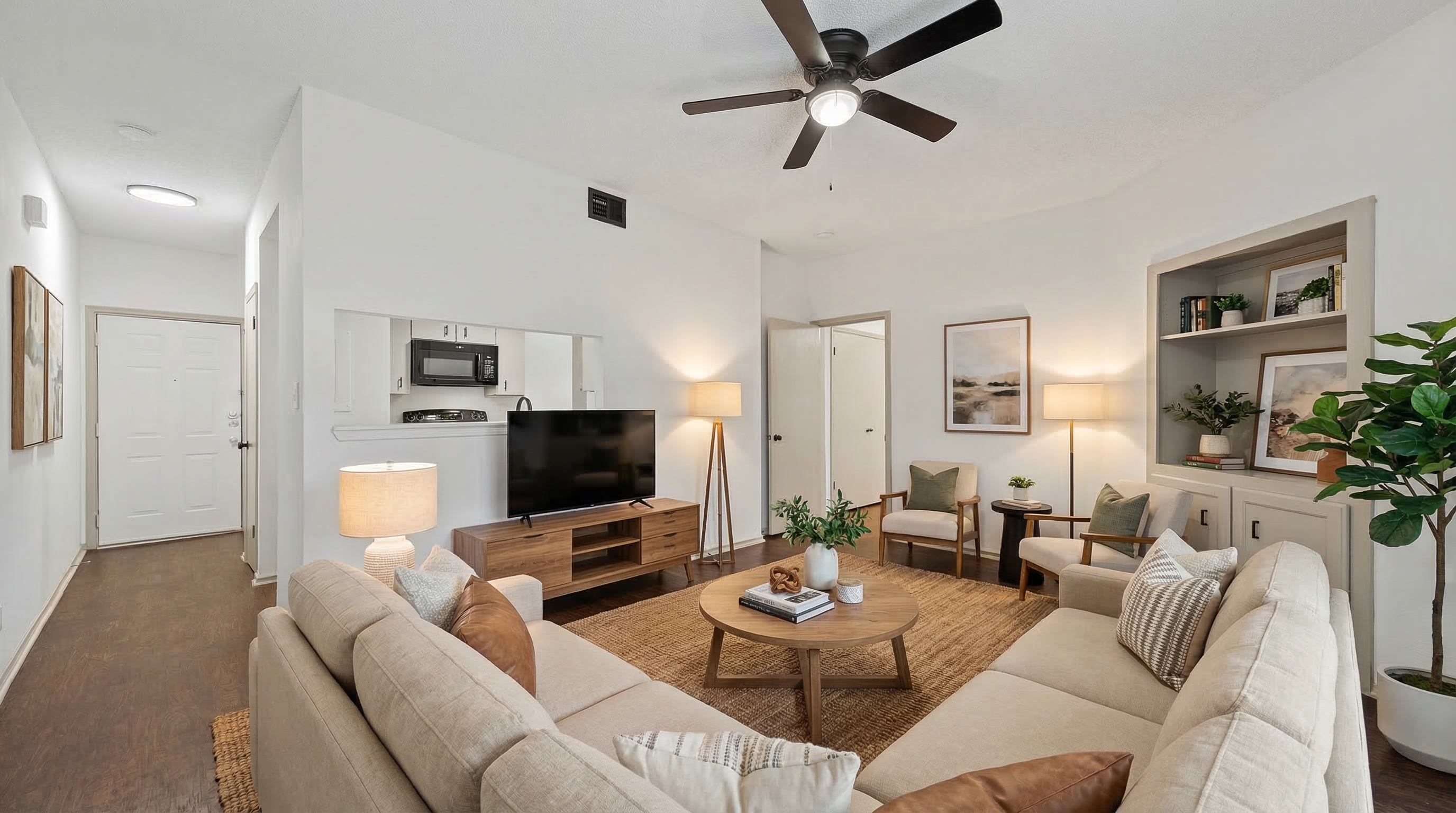
If you're splitting a 4-bedroom floor plan at 19Eleven, your per-person cost drops dramatically while you get loft-style living with exposed beams, polished concrete floors, and a gated community — none of which you'll find in a dorm.
What You Get Off-Campus That You Don't Get On-Campus
The cost comparison only tells part of the story. Here's what you're gaining when you move off-campus:
- Your own kitchen — no more mandatory meal plans or dining hall hours
- More space — even a 1-bedroom apartment is bigger than most dorm rooms
- Privacy — no RA checks, no quiet hours enforced by someone else
- Pets allowed — most off-campus apartments (including 19Eleven) welcome pets
- Washer/dryer in-unit — no more quarters and waiting for a free machine
- Lease flexibility — 12-month leases mean you have a place during summer, too
At 19Eleven specifically, you also get access to an indoor pool, sports court, study rooms, and a coffee bar — the kind of amenities that make your apartment feel like more than just a place to sleep.
When Off-Campus Doesn't Save You Money
Let's be honest: off-campus housing near Baylor isn't always cheaper. If you're comparing a premium single apartment to a shared triple dorm room with the cheapest meal plan, the dorm might win on raw cost. Here's when off-campus makes the most financial sense:
- You have roommates. Splitting a 2–4 bedroom apartment is where the real savings happen.
- You cook at home. Ditching the meal plan saves $3,500+ per semester, but only if you're actually cooking.
- You read the fee schedule. Choose a complex with transparent pricing (not one that buries $200/month in mandatory add-ons).
- You factor in the full year. Dorm leases are 9 months. If you need housing over summer, you're paying for a sublet anyway.
How to Start Your Search
If you're ready to explore what off-campus housing near Baylor actually costs for your specific situation, here's where to start:
- Check out 19Eleven's floor plans to see real pricing for 1–4 bedroom loft-style apartments walking distance from campus.
- Schedule a tour — seeing the space in person (and asking about the full fee breakdown) is the only way to compare honestly.
- Do the math with roommates. Bring your potential roommates to the tour and calculate per-person costs on the spot.
- Start early. The best apartments near Baylor fill up between October and February. Don't wait until spring to start looking.
The Baylor university off campus housing cost conversation doesn't have to be stressful. Once you know the real numbers — not just the advertised rent, but the total monthly out-of-pocket — the decision gets a lot simpler. And if transparent pricing, loft-style character, and a gated community sound like your kind of place, start your application today.
Smart Ways to Lower Your Off-Campus Housing Cost
You don't need to settle for the cheapest apartment in Waco to keep your budget under control. A few strategic moves can save you hundreds each month:
Split a larger unit. A 4-bedroom apartment at $2,000/month sounds expensive until you divide it four ways. At $500 per person plus minimal fees, it's the most affordable path to off-campus living near Baylor — and you get a full kitchen, living room, and your own bedroom.
Look south of campus. The blocks south of Baylor along S 8th Street offer some of the best value in the area. You're still within walking distance of class, but rents tend to be lower than the complexes directly north of campus competing for premium pricing.
Skip the furnished upgrade. Some complexes charge $75–$150/month extra for furnished units. Check Facebook Marketplace, Baylor's student exchange groups, and end-of-year move-out sales for furniture instead. You'll furnish your entire room for less than two months of the "furnished" upcharge.
Ask about the total monthly cost — not just rent. When you tour an apartment, ask this exact question: "What is my total monthly out-of-pocket cost, including all mandatory fees?" If the leasing agent can't give you a straight answer, that's a red flag.
Living off-campus near Baylor doesn't have to break the bank. With the right apartment, the right roommates, and a clear picture of the real costs, most students actually spend less than they would in the dorms — and get a much better living experience in return. Ready to see the numbers for yourself? Browse our floor plans or schedule a tour to get started.